


Continuous medical education is essential for responsible plastic surgery. The XXXIII International Congress of Plastic, Esthetic, and Reconstructive Surgery brought together national and international specialists in Tijuana to share knowledge and analyze advances in breast surgery, body contouring, and reconstructive procedures.
Tijuana, meeting point for updates in plastic surgery
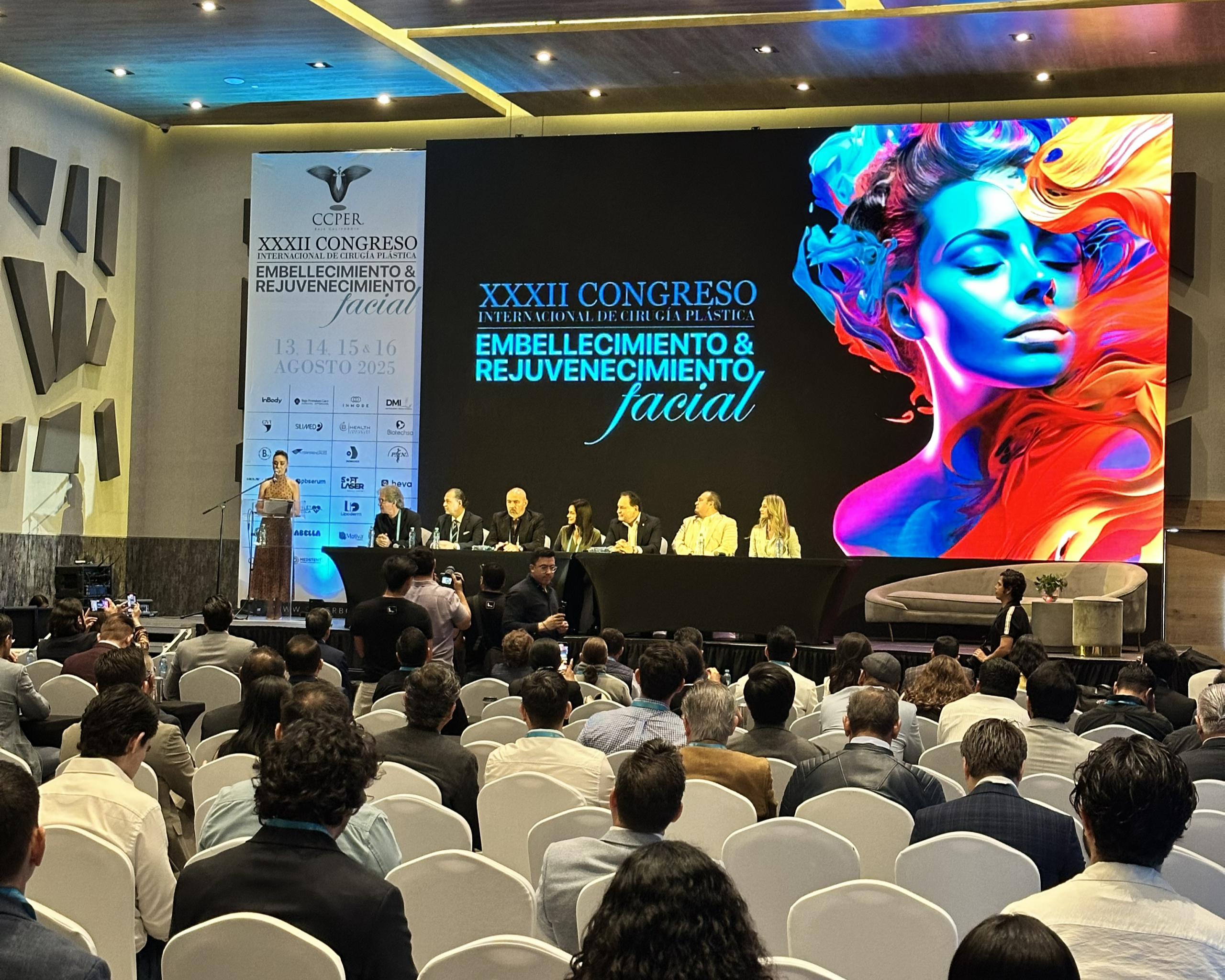
From August 12 to 15, 2026, Tijuana hosted the XXXIII International Congress of Plastic, Esthetic, and Reconstructive Surgery, organized by the College of Plastic, Esthetic, and Reconstructive Surgeons of Baja California (CCPERBC).
Under the slogan “From Surgery to Sculpting: The New Era of Body Contouring”—from surgery to sculpting: the new era of body contouring—the meeting aimed to promote the exchange of knowledge, clinical experiences, and advancements related to contemporary plastic surgery.
This type of academic meeting allows specialists to review different surgical techniques, discuss the challenges each procedure presents, and reflect on how to integrate medical advances into a patient-centered clinical practice.
What topics were addressed during the congress?
The academic program included esthetic and reconstructive surgery procedures, with special attention to breast surgery and body contouring.
Among the main topics, the following stood out:
- Abdominoplasty and body contouring surgery: techniques to remove excess skin and improve abdominal contour in selected patients.
- Liposuction and liposculpture: principles for treating localized fat deposits and improving the harmony of the silhouette.
- Post-bariatric surgery: alternatives for patients who have experienced significant weight loss and have excess skin in various regions of the body.
- Breast surgery: procedures such as mastopexy, augmentation, reduction, and breast reconstruction.
- Surgical safety and complication management: essential aspects for identifying risks, preventing problems, and acting promptly when unexpected situations arise.
- New perspectives in plastic surgery: analysis of techniques and approaches that aim to meet the anatomical and functional needs of each patient.
The congress also included academic activities with live surgical demonstrations, an opportunity to analyze the planning, technical fundamentals, and clinical decisions involved in complex procedures.
The evolution of body contouring: beyond fat removal
Body contouring surgery has evolved toward a more comprehensive assessment of anatomy, tissue quality, and individual proportions.
Although liposuction and liposculpture are procedures known for their ability to modify localized fat deposits, not all patients need the same treatment. The elasticity of the skin, the distribution of adipose tissue, the presence of sagging, and the characteristics of the abdominal wall can influence the choice of surgical technique.
For example, a patient with localized fat deposits and good skin elasticity might be a candidate for liposuction. On the other hand, a person with significant excess skin or separation of the abdominal muscles may require an evaluation to determine if a tummy tuck or another procedure offers a more appropriate solution.
The goal should not be to pursue an identical silhouette for everyone but to identify which procedure can provide a reasonable and proportionate improvement according to each person’s anatomy and expectations.
Post-bariatric surgery: a different stage in the body transformation process
Massive weight loss can represent an important change for health and quality of life. However, after losing a significant amount of weight, some patients experience excess skin on the abdomen, arms, thighs, back, or gluteal region.
In these cases, post-bariatric surgery can help remove excess tissue and improve body contour. Depending on individual needs, procedures such as abdominoplasty, arm lift, thigh lift, or circumferential trunk remodeling may be considered.
The assessment requires special attention to nutritional status, weight stability, associated diseases, and recovery capacity. In many cases, it is also necessary to plan the interventions in stages.
Careful patient selection and surgical planning are essential to balance esthetic goals with safety.
Surgical safety: a priority that must not be overlooked
One of the most important aspects of plastic surgery is recognizing that every surgical procedure involves risks. Technical innovation must be accompanied by an appropriate medical evaluation, a responsible selection of patients, and a care plan before, during, and after the surgery.
Among the aspects that must be considered are:
- The medical history and surgical history.
- The weight, nutritional status, and pre-existing conditions.
- The extent and estimated duration of the procedure.
- The anesthetic assessment and the hospital conditions.
- The identification and prevention of complications.
- The indications for recovery and postoperative follow-up.
It is also important to understand that not all techniques are appropriate for all patients. The decision must be individualized based on a complete medical evaluation and an honest conversation about the expected benefits, limitations, and risks.
What does this mean for patients?
Although a medical congress is primarily aimed at healthcare professionals, its topics have important implications for those considering undergoing plastic surgery.
Continuous updating helps surgeons review the available evidence, contrast clinical experiences, and maintain a critical view of new techniques and technologies. However, attending a conference or learning about a new technique does not guarantee a specific outcome on its own.
For the patient, there are other equally important elements: the specialist’s training, their current certification, their experience with the specific procedure, the hospital’s conditions, and the quality of postoperative follow-up.
Before making a decision, it is advisable to ask which procedure is recommended and why, what its risks are, what alternatives exist, and what the recovery process will be like.
The importance of choosing a certified plastic surgeon
In an environment where there is a wide range of esthetic treatments, verifying the professional’s credentials is an essential step.
In Mexico, patients can verify the specialist’s certification through the Mexican Council of Plastic, Esthetic, and Reconstructive Surgery (CMCPER), in addition to confirming their professional and specialty license through the corresponding official channels.
The choice of surgeon should not be based solely on price, result photographs, or social media trends. An informed decision requires knowing the doctor’s credentials, receiving an individualized assessment, and having clear information about the entire surgical process.
Our commitment to responsible plastic surgery
Plastic surgery should be understood as a combination of medical knowledge, planning, surgical technique, and personalized care.
Academic meetings such as the International Congress of Plastic Surgery of Baja California represent relevant spaces to maintain dialog among specialists and reflect on the evolution of our discipline.
In our practice, we consider patient safety, transparent communication, and the pursuit of harmonious and proportional results to be fundamental. Each person has a different anatomy, needs, and expectations; therefore, the surgical recommendation should arise from an individual assessment and not from a trend or a technique applied indiscriminately.
If you are considering body contouring surgery, the first step is a personalized medical assessment. During the consultation, your goals, medical history, available alternatives, and the risks associated with each option can be analyzed to make an informed and realistic decision.
The information in this article is educational and does not replace an individual medical evaluation. The indication of any procedure depends on the characteristics and conditions of each patient.

Dr. Flores Valdivia